

Zahida Ahmad ( Department of Obstetrics and Gynaecology, Dow Medical College and Civil Hospital, Karachi, Pakistan. )
August 1985, Volume 35, Issue 8
Original Article

Abstract
Maternal deaths amongst 4641 deliveries over 5 years were analysed. ine overall maternal mortality was 27.4/1000 total births and 24.4/ 1000 when abortion deaths were excluded. Complications of pregnancy, labour and puerperium accounted for 72.4%, and indirect causes for 27.6 percent of deaths. Heamorrhage from all causes (29.9%) and sepsis including septic abortion (29.1%) were the commonest causes of maternal mortality.
Majority of the patients (50.3%) were between 20 - 30 years of age and in the post partum period (62.2%). Mortality was high in those admitted in precarious condition. Of 127 deaths 109 were admitted in critical condition and 120 deaths were considered preventable. The commonest avoidable factor was patient’s attitude (JPMA 35 : 243, 1985).
Introduction
Maternal mortality is, the death of any woman from any cause while pregnant or within 42 days of termination of pregnancy, irrespective of the duratiqn and the site of pregnancy (FIGO).
Maternal mortality in England and Wales from 1955 - 1966 varied from 0.50 - 0.19/1000 total births.1 While in Pakistan it was 6-8/1000 live births between 1978 - 19832 . Santpur and Savaiker3 reported maternal mortality of 18/1000 total births and 14.8/1000 total births excluding abortion over a period of 5 years in a rural based teaching hospital in Miraj, India. Civil Hospital, Karachi is a teaching hospital attached to Dow Medical College. It is the main referral hospital for city’s general practitioners, maternity homes and private hospitals. in addition large number of serious patients from Karachi, interior of Sind and Baluchistan are admitted directly. The maternal mortality rates are high at this hospital. A critical analysis of maternal death and its causes in one of the units are presented here.
Material and Methods
A retrospective analysis of maternal deaths at one of the units of gynaecology and obstetrics Civil Hospital Karachi, was done. From 1979 -1983, 127 maternal deaths were encountered, of which 35 were due to indirect causes, and the rest due to various obstetrical causes.
Results
The overall maternal mortality rate was 27.4/1000 total births and when abortion deaths were excluded it was 24.4/1000 total births. (Table I).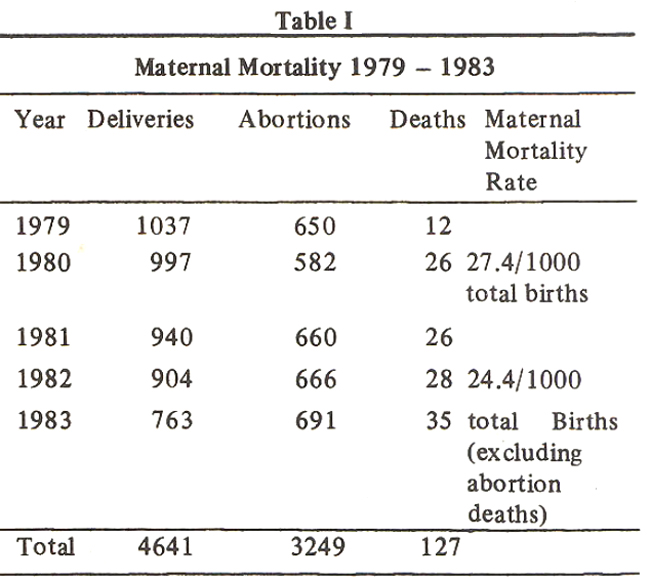
Majority (50.3%) of patients were in the age group 20 to 30 years.
Deaths due to complications of pregnancy, labour and puerperium (obstetric causes) were 72.4 percent and those due to indirect causes were 27.6 percent.
Major causes of maternal death were medical disorders, haemorrhage, sepsis, toxaemia, and abortion. Seven deaths were due to obstetric trauma (Table-II).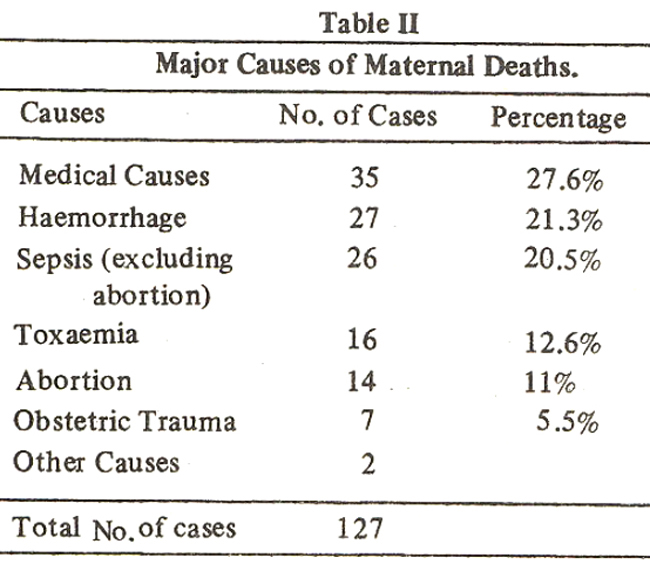
Death from puerperal sepsis was more in 25 to 30 years of age while that from septic abortion occurred in all age groups except over 40. Sixteen deaths occured due to toxaemia of pregnancy. Of these 50 percent between 20 to 25 years of age. Majority of deaths (62.2 percent) occured in post partum cases irrespective of place of delivery (Table III).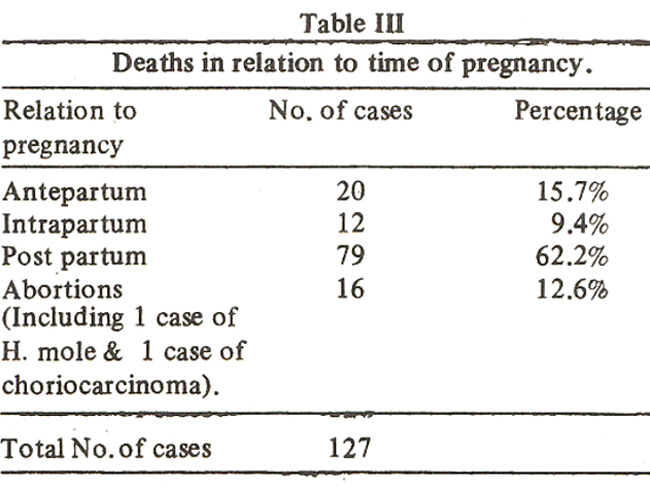
Thirty seven percent cases had spontaneous delivery while 25 (19.7%) underwent surgery. (Table IV).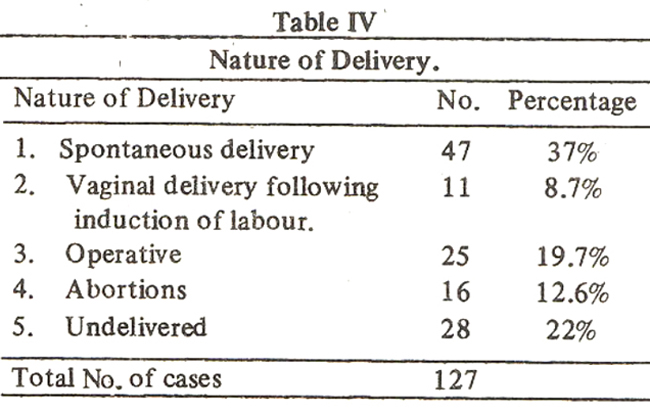
Twenty cases had Caesarean section, two Laparatomy for ruputured uterus and three mid cavity forceps. In 12 cases Caesarian section was done due to maipresentation or disproportion, in 4 due to placenta previa, in 2 due to abruptioplacentae and one each of uterine inertia and toxaemia of pregmancy. Causes of death after Caesarian section are shown in table V.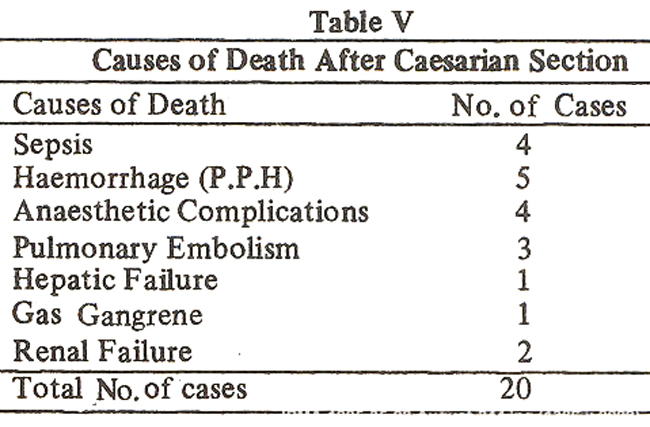
Thirty five deaths due to medical causes, included 4 anaesthetic deaths; 2 due to Mendeison’s syndrome and 2 due to aspiration pneumonia. In 6 deaths due to indirect causes pulmonary embolism was the probable cause of death. Three of these 6 cases were delivered by Caesarean section, 1 with mid cavity forceps and two spontaneously. Of 6 deaths due to pulmonary embolism, 3 occurred in cases of antepartum haemorrhage. Twelve patients died of heart failure most of them were between 30 - 35 years of age. Of them 3 had organic heart disease, and were emergency admissions who had received no antenatal care. In 9 non-booked cases cardiac failure was caused by severe anaemia. Death due to cardiac failure occured mostly between 6 - 8 months of pregnancy and in the post partum period. Twelve deaths were due to hepatic failure. All were admitted with severe jaundice or hepatic coma. One of these patients developed eclamptic fits in addition to jaundice and another had severe anaemia and asthma (Table VI).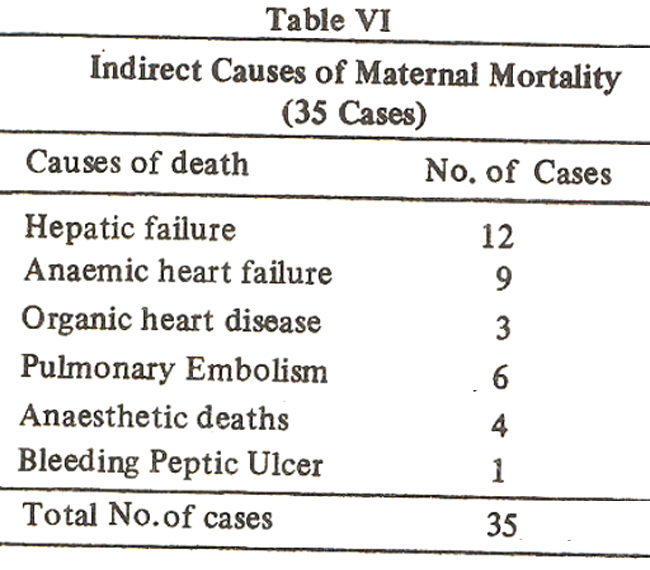
Three of the 12 patients died undelivered, while 8 aborted or delivered spontaneously or after artificial rupture of membranes. One patient underwent Caesarean section for Cephalopelvic disproportion. Two patients had post partum haemorrhage following delivery.
A full term case was admitted in shock after severe haematemesis. She died within few minutes and a probable diagnosis of bleeding peptic ulcer was made.
Twenty seven deaths occurred due to obstetric haemorrhage, 19 had post partum haemorrhage, (PPH6) abruptio placentae and 2 placenta previa. Of 19 deaths due to PPH, 17 were due to primary and 2 due to secondary haemorrhage. Fourteen of these 19 patients delivered elsewhere and were admitted in a moribund condition.They all died soon after admission. Four of these patients had retained placental tissues which were removed after treatment 6f shock. Five patients had PPH after delivery in Civil Hospital, 4 of these were delivered by Caesarean section and one vaginally. Caesarean section was done due to obstructed labour in 2 cases and major degree placenta praevia in the other 2. Of the 2 secondary PPH cases, one had uterine inversion and died of shock, the other was brought in moribund condition and died within minutes of admission.
In five years 26 deaths occurred due to sepsis. There were 13 deaths each due to intrapartum and post partum sepsis and 11 due to septic abortion. All 13 cases of intrapartum sepsis were admitted after being in prolonged labour elsewhere. Membranes were absent in all 13 cases and they were grossly infected. Eight of these were delivered vaginally while 4 had Caesarean section and died of septicaemia, septic peritonitis and wound dehiscence in the postoperative period. One underwent laparotomy for removal of a gangrenous uterus and died of septic peritonitis and septicaemia.
The causes of death in 26 Sepsis eases is shown in Tablé Vil. Toxaemia of pregnancy resulted in 16 deaths, of which 14 had Eclampsia and two fulminating preeciampsia. Eclampsia was intrapartum in 12 and antepartum in 2 cases Twelve Eclampsia cases delivered vaginally after artificial rupture of membranes and two died undelivered. One case of fulminating preclampsia was delivered vaginally and one by caesarean section. All toxaemia cases were admitted in emergency having had no antenatal care. In toxaemia, pulmonary oedema was the cause of death in 7, hyperpyrexia and acute renal failure in 4 each, and cardiac failure in 1 case.
Abortion was responsible for 14 deaths. In 3 of these cases, history of interference by Dais was present . Two of the 3 induced abortion cases died of septic shock and one due to tetanus. One patient was admitted after having dilatation and evacuation in another obstetric unit of Civil Hospital. On laparotomy she was found to have intestinal and uterine trauma. She died in the post operative period due to septicaemia and septic peritonitis. Of 14 abortion cases 11 died of sepsis and 4 of haemorrhagic shock.
Seven deaths were caused by obstetric trauma and all had ruptured uterus. They were admitted in shock and moribund condition and died within minutes to hours. Only two of these patients underwent lapaiotomy but died in the immediate post operative period due to haemorrhagic shock.
One death due to Hydatidi form mole and one due to chorio carcinoma have been coded to other causes. The patient with Hydatidiform mole died after hysterotomy. The patient with choriocarcinoma had an abortion two months prior to the development of malignancy. She died of pulmonary metastasis and her death was considered un preventable. No patient died of ectopic pregnancy in the in the last five years.
Discussion
Of 127 patients who died after admission to this unit, 109 were brought in moribund or critical condition. One hundred and twenty deaths were considered preven table.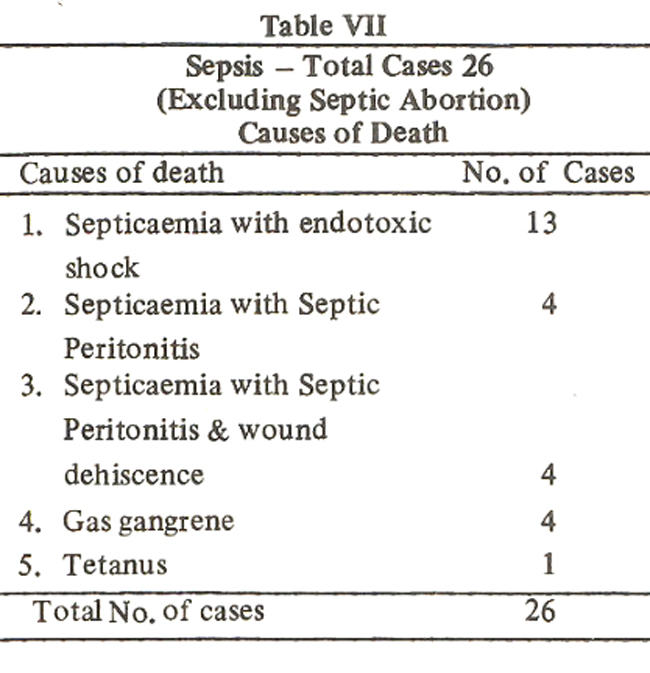
In 85 cases the patient had failed to take medical advice either due to ignorance, poverty, relative’s attitude or transportation difficulty. In 20 cases the patient went to a private maternity home but the management was deficient. The avoidable factors were unsuitable booking for delivery, failure to seek consultant advice and delay in sending the patient to Civil Hospital. Four cases were mismanaged by Dais before admission. It is suspected that this number could have been more if the relatives had not concealed facts. In 11 cases the management in the .unit was deficient. This includes deaths from anaesthesia, P.P.H., and uterine trauma during dilatation and evacuation. The avoidable factors were often concerned with circumstances p receeding admission such as poor or no antenatal care resulting in severe anaemia and delay in recognizing the need for hospital admission and treatment. However assumption of too much res-. ponsibiity by the junior staff, their failure to inform the seniors and delay in providing blood transfusion or anaesthetic services were also possible avoidable factors. Deaths due to pulmonary embolism were considered unpreventable.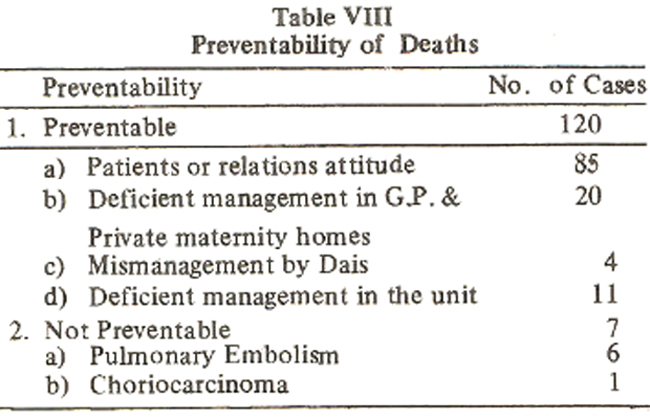
(Table VIII) The high maternal mortality at Civil Hospital is due to cases admitted in precarious condition. As the commonest avoidable factor is patients, attitude, there is a need for public education through various media. Medical facilities could be provided within easy reach.More public telephones ana ambulance services should be available for quick transportation of patients.
Refresher courses may be held for G.P’s and doctors of private maternity homes from time to time. Emphasis should be on detection of high risk factors and referral of such cases in time. maternity unit should be seen by a specialist at least once in the third trimester. For rural areas Dais can.
Every pregnant woman booked for a G.P., all causes and sepsis including septic abortion are the most important causes of death. Sepsis acquired in patient’s home, in general practitioner’s maternity unit and in the hospital suggest inadequate standards of asepsis. The risk of SepSiS after vaginal or operative delivery is high and attention must be paid to aseptic techniques if such deaths are to be prevented. The risk of performing Caesarean section late in labour when the membranes have been ruptured for many hours must be well known and swabs should be taken for bacteriology in such cases. Undue delay in evacuating the uterus in septic abortion and delay in performing laparatomy when peritonitis is suspected are possible avoidable factors.
Anaemia is a common factor in deaths from haemoarrhage, sepsis and other causes and availability of blood for transfusion is the greatest need of an obstetric unit. Patients with obstetric emergencies are a grave risk and require the knowledge and skill of an experienced anaesthe tist who must be readily available. The presence of a junior consultant in the obstetric unit during emergency hours will go a long way in reducing maternal mortality.
References
1. Humphrey, Report on confidential enquiries into maternal deaths in England and Wales 1964 1966, 1969.
2. “Steps to realise the Health objective of fifth five years plan (1978 1983) of the Government of Pakistan through health education”. A UNICEF/UNDP report in collaboration with the health education cell, Basic health services, Project of the Ministry of Health & Social Welfare Islamabad July, 1980
3. Santpur, S.R. and Savaikar, S.V. “maternal mortality in a rural based teaching hospital”. Asia Oceania J. Obstet. GynaecoL, 1980; 6:43.
Journal of the Pakistan Medical Association has agreed to receive and publish manuscripts in accordance with the principles of the following committees:


