

Waris Qidwai ( Family Medicine Division, Department of Community Health Sciences, The Aga Khan University, Karachi. )
September 1998, Volume 48, Issue 9
Family Medicine Corner

Hyperlipidaemia is a powerful predictor of coronary artery disease, with a strong, independent, continuous and grades positive associationbetweencholesterol levels and risk of coronary events. Several large studies have shown the benefit of cholesterol reduction and there is clear evidence of the efficacy of statins in the reduction of events inprimazy and secondary prevention1.
A 1% reduction in the total serum cholesterol reduces the frequency of fatal coronary heart disease by atleast 2%2. A l0% meandecrease inthe total serum choelsterol level reduces the incidence of both fatal and nonfatal myocardial infarctions3. Family physicians need to recognize patients at risk for hypercholesterolaemia, institute appropriate therapy and counsel family members about disease prevention4.
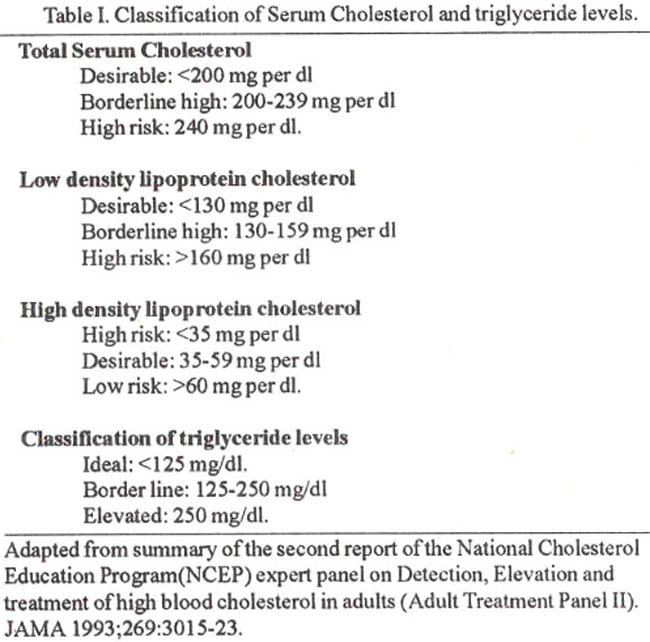
Table I classifies the cholesterol and triglyceride levels.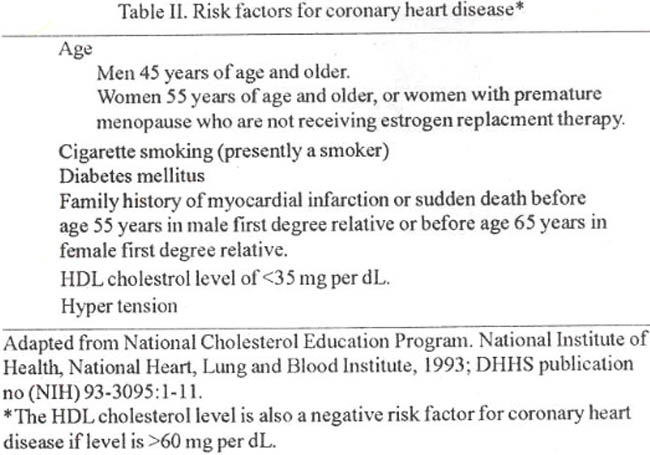
Table II lists the risk factors for coronary artery disease.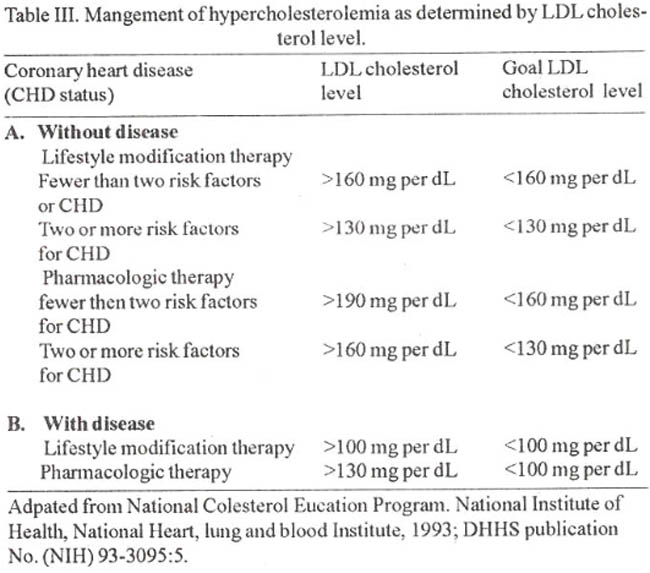
Table III lists the LDL-cholesterol level to be targeted in a particular case.
Screening
Total cholesterol should be measured atleast once eveiy five years in all adults 20 years of age and older5.
Management
Life style modifications
Dietaiy therapy
Begin with step-i diet of the American Heart Association
1. <300 mgs cholesterol daily
2. <30% total fat daily
3. < 10% saturated fat daily
Continue for six months. In case of failure, consider step-2 diet.
1. <200 mgs cholesterol daily
2. <30% total fat daily
3. <7% satured fat daily
Controlled studies6-8 of the step 1 diet for hypereholestemlaemia inout-patients have shown reduction in total cholesterol levels of upto 4 percent over a two to five year period. The step 2 diet was found to lower total serwn cholesterol levels by 13 percent over five years9.
Exercise
The favourable effects of exercise on lipoprotein metabolism, particularly evident in the postprandial state, may help to decrease susceptibility to atherosclerosis in exercise trained people10.
Smoking
Active smoking has an adverse impact on serum lipid and lipoprotein levels in patients with familial combined hypcrlipidaemia11.
Treatment
a. Hypercholesterolemia
Treatment dis advised if LDL-cholesterol >159 mg per dL or>130 rngpcrdL with two ormore risk factors.
Dietaiy management is treatment of first choice.
Choices for drug treatment are in order of preferance.
1. HMG-Co-A reductase inhibitors like lovastatin (Mevacor) 20-80 mgs daily are required. Liver function tests, plasma lipids and creatinine phosphokinase need to be monitored.
2. Niacin in daily doses of 0.5 to 3 gram daily
Liver function tests and creatinine phosphokinase need to be monitored.
Side effects includes gastric irritation, increase in serum uric acid and blood sugar levels. Cutaneous flushing and pruritis can occur.
3. Bile acid scquestrants
Like cholestyramine 4-8g once or twice daily. No systemic absorption. Gastro-intestinal upsets are conunon side effect.
b. Hypertriglyceridemia
Look for secondary cause such as diabetes mellitus, oral contraceptive use or alcohol use.
Dietary management is the first choice of treatment.
Gemfibrozil is the drug of choice. Usual dose is 600 mg twice daily. Common side effects are gastrointestinal upsets.
Role of simvastatin in the treatment of hypercholesterolemia and mixed hyperlipidemia is increasing, whereas fibrates are increasingly limited to hypertriglyceridemia12.
Caution is required in combining hypolipidaemic drugs as side- effects of individual drugs may be potentiated when used in combination13. The combination of bezafibrate and sirnavastatin was more effective in controlling mixed hyperlipidemia then either drug alone and did not provoke more adverse events14.
Fouw Up
Once pharmacologic therapy is begun, the LDL cholesterol level is measured in four to six weeks and again in three months. If the desired LDL cholesterol level is achieved, therapeutic response and medication side effects can be evaluated every three months5.
If a patient fails to achieve the therapeutic goal, lifestyle modifications are reemphasized. In addition, the patient canbe switchedto another drug, ortwo drugs canbeusedincombination. Therapy usually continues forthe patient’s life time4.
References
1. Gensini OF, Comeglio M, Colella A. Classical risk factors and emerging elements in the risk profile for coronary artery disease. Eur. Heart. J., 1998,19 (Suppl A:A)53-61.
2. The lipid research clinics coronary primary prevention trial results. Reduction in incidence of coronary heart disease. JAMA, 1984;25 1:351-64.
3. Rossouw JE, Lewis B, Rifkind BM. The value of lowering cholesterol after myocardial infarction. N. Engl. 3. Med., 1990,323:1112-9.
4. Gregory H. Blake, Haramie C. Triplett. Management ofHypercholesterolemia. Am. Fam.Physician, 1995;5:1157-66.
5. National Cholesterol Education Program. Second report of the expert panel on detection, evaluation and treatment of high blood cholesterol in adults. National Cholesterol Education Program, National Institute of Health. Islamabad. National Heart Lung, and Blood Institute, 1993;DHHS Publication No. (MIH): 93-3095.
6. Ramsay LE, Yeo WW, Jackson PR. Dietary reduction of serum cholesterol concentration: Time to think again. Br. Med. J., 1991 ;303 :953-57.
7. Hunnmghake DB, Stein BA, Dujovne CA et al. Th efficacy of intensive dietary therapy alone or combined with lovastatin in outpatients with hypercholesterolaemia, N. Engl. J. Med., 1993;328:1213-9.
8. Ginsberg HN. Baff SL, Gilbert Act al. Reduction of plasma cholesterol levels in normal men on an American Heart Association step I diet or a step I diet with added monounsaturated fat. N. Engl. J. Med., 1990;322:574-9.
9. Hjermam I. Smoking and diet intervention in healthy coronary high risk men. Methods and five year follow-up of risk factors in a randomized trial. The Oslo study. J. Oslo City Hasp., 1980;30:3-17.
10. Foger B, Patsch JR. Exercise and post prandial lipaemia. J. Cardiovasc. Risk, 1995;2:316-22.
11. Kralikora E, Sbora J and Rames J. Patients with familial combined hyperlipidemia and smoking. Cas-Lek-Cesk. 1997;136:439-42.
12. Tikkanen MJ. Selection of appropriate type and intensity of lipid-lowering therapy. Curt Opin. LipidoL, 1995;6:360-4.
13. Sum CF. Tan CE. Chews LS. Management of hypalipidemia, Singapore, Med. J., 1995;36:410-6.
14. Kehety A, Macmahon M, Barbir Met al, Combined bezafibrate and simvastatin treatment for mixed hypertipidemia. QJM, 1995;88:42 1-7.
Journal of the Pakistan Medical Association has agreed to receive and publish manuscripts in accordance with the principles of the following committees:


